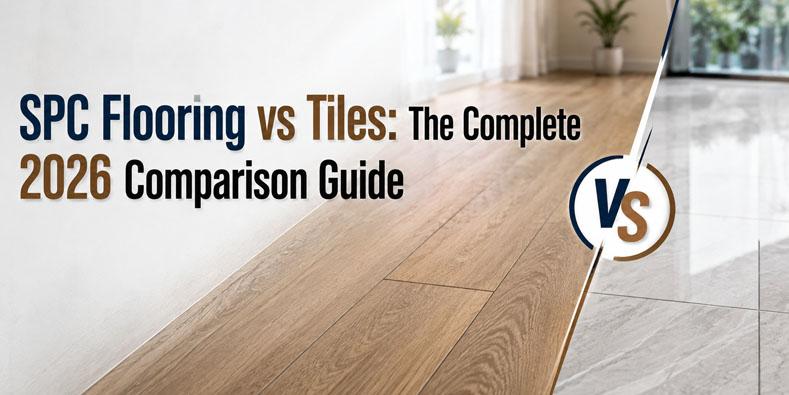
Choosing the right flooring is one of the most important decisions when building or renovating a home. In 2026, homeowners are increasingly comparing SPC Flooring vs Tiles because both options offer durability, attractive designs, and long-term value. However, each has different strengths depending on your budget, lifestyle, and maintenance needs. Understanding these differences can help you make a smarter investment for your home or commercial space. This guide explains everything you need to know, from durability and installation to maintenance, comfort, and cost, so you can confidently select the flooring that best suits your requirements.
What is SPC Flooring?
Stone Plastic Composite (SPC) flooring is a rigid vinyl flooring made using limestone powder, PVC, and stabilizers. It is known for its strength, water resistance, and modern appearance. Available in wood, stone, and tile finishes, SPC flooring offers the look of premium materials without the high maintenance.
What Are Traditional Tiles?
Tiles are commonly made from ceramic, vitrified, or porcelain materials. They have been used in homes for decades because of their durability, water resistance, and wide range of colours and designs. Tiles remain a preferred choice for kitchens, bathrooms, and outdoor spaces.
SPC Flooring vs Tiles: Key Comparison
| Feature | SPC Flooring | Tiles |
| Installation | Quick click-lock installation | Requires adhesive and grout |
| Water Resistance | Excellent | Excellent |
| Comfort | Soft and warm underfoot | Hard and cold surface |
| Maintenance | Easy to clean | Low maintenance but grout needs cleaning |
| Durability | Highly durable | Extremely durable |
| Noise | Reduces sound | Can produce more noise |
| Repair | Individual planks can be replaced | Damaged tiles are harder to replace |
| Cost | Competitive installation cost | Higher installation expenses |
1. Durability
Both flooring options are highly durable. SPC flooring resists scratches, dents, and daily wear, making it suitable for busy households. Tiles can last for decades but may crack if heavy objects fall on them.
2. Water Resistance
If moisture protection is your priority, both materials perform well. SPC flooring is completely waterproof, making it suitable for kitchens and living spaces. Tiles are naturally water-resistant, but grout lines require regular maintenance to prevent staining.
3. Installation Process
One of the biggest advantages of SPC flooring is its easy installation. Most products feature a click-lock system that reduces labour time and installation costs. Tile installation is more time-consuming because it involves adhesives, grout, and curing time.
4. Comfort and Walking Experience
SPC flooring provides a slightly cushioned surface, making it more comfortable for long periods of standing. Tiles feel harder and colder, especially during winter, unless paired with underfloor heating.
5. Maintenance Requirements
Both options are easy to maintain with regular sweeping and mopping. However, tile grout may require occasional deep cleaning. SPC flooring does not have grout lines, making everyday cleaning simpler.
6. Design and Appearance
Modern SPC flooring offers realistic wood and stone textures that closely resemble natural materials. Tiles provide countless colours, sizes, and finishes, allowing homeowners to create traditional or contemporary interiors.
7. Cost Comparison
While tile prices vary widely, installation often increases the total project cost. SPC flooring usually offers faster installation and lower labour expenses, making it a cost-effective solution for many homeowners.
Which Flooring Should You Choose?
Choose SPC flooring if you want:
- Fast installation
- Comfortable walking surface
- Waterproof performance
- Easy maintenance
- Modern wood or stone appearance
Choose tiles if you prefer:
- Traditional flooring
- Long-lasting ceramic or porcelain surfaces
- Outdoor applications
- High heat resistance
Conclusion
When comparing SPC Flooring vs Tiles, there is no single winner for every situation. Your decision should depend on your budget, lifestyle, design preferences, and maintenance expectations. SPC flooring is an excellent choice for homeowners seeking comfort, quick installation, and modern aesthetics, while tiles remain a reliable option for areas requiring exceptional durability and classic appeal.
If you are planning to upgrade your flooring, Quirky Flooring provides quality flooring solutions and expert guidance to help you select the most suitable option for your space.
Frequently Asked Questions (FAQ’s)
1. Is SPC flooring better than tiles for homes?
SPC flooring offers better comfort, easier installation, and excellent waterproof performance, while tiles provide exceptional durability and a traditional finish. The right choice depends on your needs and budget.
2. Can SPC flooring be installed over existing tiles?
Yes. In many cases, SPC flooring can be installed directly over existing tiles if the surface is clean, level, and free from significant damage.
3. Which flooring lasts longer, SPC or tiles?
Both are highly durable. Quality tiles can last several decades, while premium SPC flooring also provides many years of reliable performance with proper care.
4. Is SPC flooring suitable for kitchens?
Yes. SPC flooring is completely waterproof, stain-resistant, and easy to clean, making it an excellent choice for kitchens and other moisture-prone indoor spaces.
5. Does SPC flooring require special maintenance?
No. Regular sweeping and occasional damp mopping are usually enough to keep SPC flooring clean and looking new without requiring special treatments.
RELATED ARTICLES:
- Waterproof Scratch Resistance Flooring: Features Every Homeowner Should Know
- What is SPC Flooring? Complete Guide to Features, Benefits, Installation & Maintenance
- Thermo Pine Flooring: What You Need to Know!
- Top Trends in Flooring: What’s Hot Right Now?
- Hardwood vs. Laminate: Which Flooring Option is Right for You?